
Home is where the Heart is…
Our Story
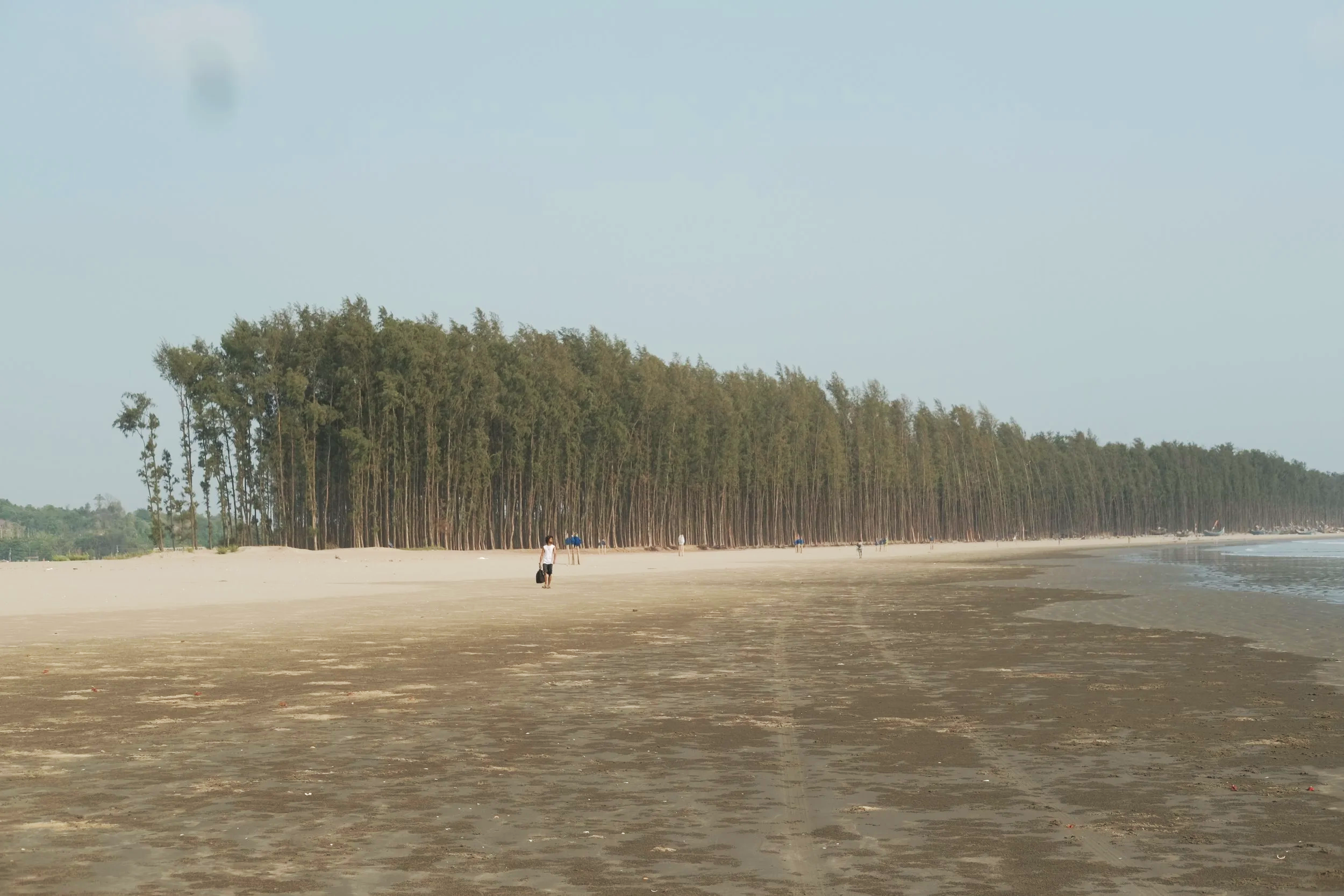
Matarbari Tales began not as a collection of stories but as an act of inquiry. How do we document the memory of a place when the land itself is changing so rapidly? How do we preserve the memory of Matarbari?
The need to capture the true experiences of this place is a result of my deep connection to the people of Matarbari over the past four years since 2021. That relationship shaped my understanding of the intersection of environment, people, and culture, and helped me realise the profound pivot point, where the quiet rhythm of an ancestral past meets the roaring future of national ambition. While we acknowledge that progress is a necessary current, the ecological and cultural erosion this progress brings along demands a response and, we must act with deep listening.
Our visual-arts based community archive and research preserve Matarbari’s memory and ensure that the lived moments of its people are not silenced by the spectacle of development. Our aim is to decolonise memory and document the real experiences of the region’s people, especially focusing on those voices which are traditionally unheard - the women and youth of Matarbari.
Yours,
Mahenaz Chowdhury
workshops.
-
The genesis of the Story Lab, which culminated in the creation of two short films, was rooted in a distinct decolonial ambition: to shift the narrative control. For too long, the story of Matarbari has been depicted by "others." Our objective was to introduce, inspire, and encourage the children of Matarbari to tell their own narratives in the way they wanted to describe. In a culture where, child marriage is evident and majority of the girls get married after highschool, it was particularly important to hear the voices of the adolescent girls in visual arts.
Creativity as an act of rebellion
Visual arts serve as a powerful tool within the framework of climate futurism, drawing critical attention to the voices and memories of communities living within the space where fast-paced industrialization—though necessary for progress and keeping up with the world—is inevitable. By creating this space for creativity, the project itself was intended as an act of rebellion against the homogenizing forces of capitalism and colonialism.
The magical transformation
Fourteen children from class 8-10 of Matarbari High School, (9 girls and 4 boys), whose stories and visual imaginations were compelling, were selected by Mahenaz and guided by the expert team from Applebox Production. Collaborating with Piplu R. Khan, who immediately believed in the vision of a community-driven filmmaking, presented a phenomenal challenge that we collectively embraced.
What transpired in the co-learning phase was nothing short of magical. The children assumed the roles of filmmakers with astonishing smoothness by the end of the workshops, effectively running a production house from A to Z. They mastered the full spectrum of filmmaking roles, including camera operation, direction, script supervision, sound recording, makeup, and location scouting. Girls and boys worked together as one unified team, supporting one another, filling up each other's gaps, and rapidly understanding their individual strengths and weaknesses.
Piplu R Khan says, ‘Matarbari Story Lab was a happy place, a space where I could meet and share the art of storytelling with young students, and in return, see the world through their eyes. Connecting with such a diverse community and their lived realities was an eye-opener for me as a filmmaker. The Matarbari experience is something I would love to carry forward as a learning process on how we, as storytellers, can act responsibly toward community building, using storytelling as an asset.
My role there felt more like that of a fellow someone who came to share, exchange, and listen. I wanted to blend my experiences with their ideas, and I found that exchange truly inspiring. Yet, what struck me most was how limited their access is to even the most basic creative resources during these formative years.That’s when I reached out to my colleagues at Applebox, and together, we approached this lab as a community engagement initiative. For any creative collective today, I believe it’s time to associate ourselves with problem-solving. The potential of using storytelling as a tool to empower and connect people felt natural and deeply aligned with who we are and what we stand for’.
Rubina Yasmin Toha and Asrafi Siddika Zerin Share that they have never worked in such a collaborative way before, where we worked as a team. With students from mixed class from eight to ten, it was daunting at first but then it became like a family. They also added that they always wanted to do photography and hold a camera. And their dreams came true in this workshop.Toha adds, ‘I particularly enjoyed the sessions with Sadia Afrin & Hasibul Islam Razu who took the basics of photography sessions. And on the last day, we had to actually shoot a film, that was exciting! I worked on the set of- “Mystery Box”, where we had to gather all the props such as the saree,pots and biscuits to imitate making ‘bhapa pitha’. It was a real shooting!’
Md. Sabit Hossain recollects his fondest experience. He says, ‘I remember the day Piplu R Khan showed us a Japanese film during the early days of our workshop. The whole room was full of excitement and joy from watching this beautiful film together. In the middle of the movie I learnt that my uncle passed away. And the whole classroom fell silent. It was then I realized, we all were one. We felt things in unity and I felt so comforted that I have found a strong circle of friends.’
Beacon of hope
Each child emerged as a beacon of hope for Matarbari, carrying dreams to do wonders for their homeland. They are the heroes, our star champions of the visual archive. The final films, The Banyan Tree (by Mohammad Rakib) and The Mystery Box (by Noshin Tabassum), are powerful evidence of their vision and creative capability.
-
Beyond the Demarcation: The Map of Relational Knowing
The genesis of the Nakshi Kantha Map stemmed from a conceptual inquiry: What do we truly gain from the simple, drawn lines of a geographical map? The soul of a place is never defined by cold, two-dimensional demarcations, but by its people—by how they have survived, and by the eternal weaving of their stories across the land, the river, and the sea.
My concept was to explore how a truly meaningful map could emerge when the lived narratives of the community were prioritized over external boundaries. I sought a deeper, more profound layer of understanding about Matarbari.
A Layer Cake of Trust and Creation
To achieve this, I sought to know my sisters better through a collaborative piece of storytelling and craft using the traditional folk art of Nakshi Kantha. Alongside Abrar Shadman, this process unfolded like a slow and steady "layer cake" of elements coming together—first weekly, then monthly. It was a long journey, dedicating three months to transforming initial concepts from thread to textile.
This painstaking process was underpinned by the bedrock of trust and relationship of the sisterhood we have cultivated over four years in Matarbari with Fatema, Hasina, Khairunnesa, Humaira, Papiya, and Romana.
The automatically occurring theme in our creation was the fundamental need to respect the natural trajectory of the artwork. We traveled around—from the Sairer Dail Cyclone Centre to the Matarbari High School—to flesh out the memories of these women. Together, we wove stories of their elders, their community, and themselves, depicting Matarbari precisely the way they wanted to see and remember it. The result is a map of memory, trust, and co-creation.